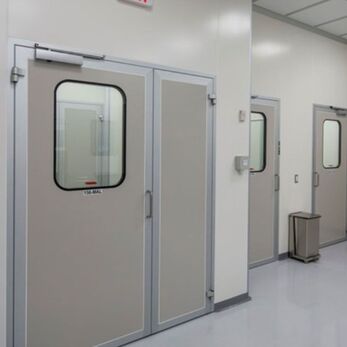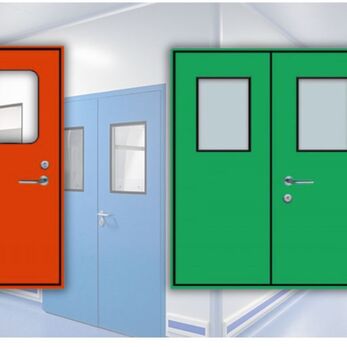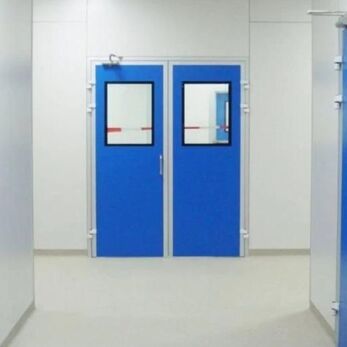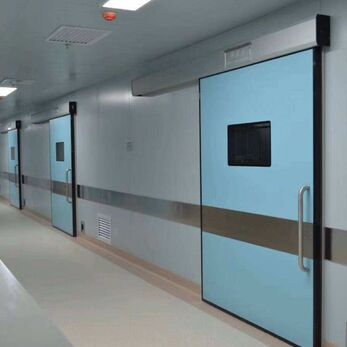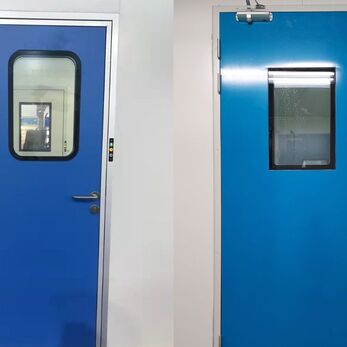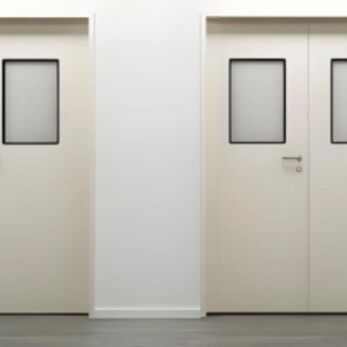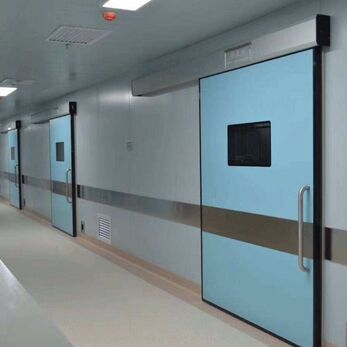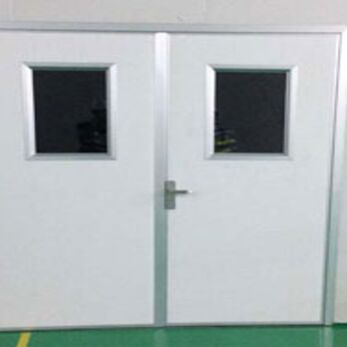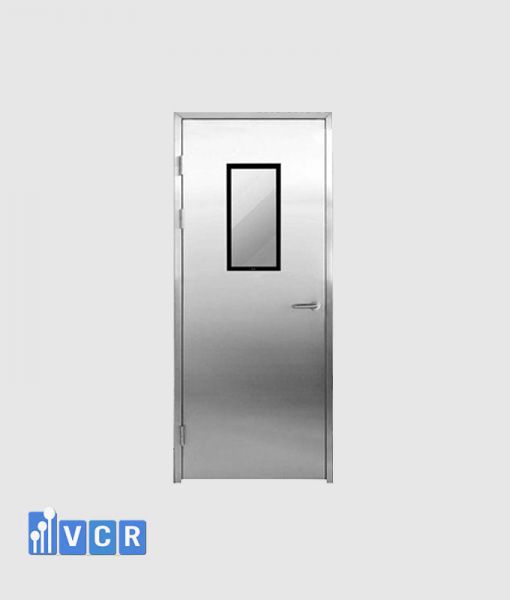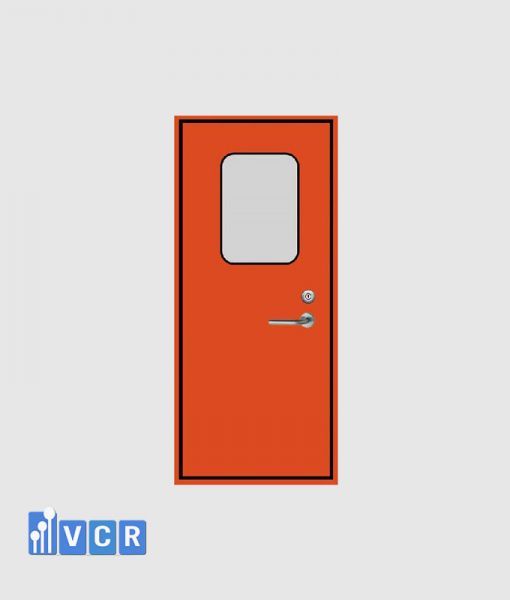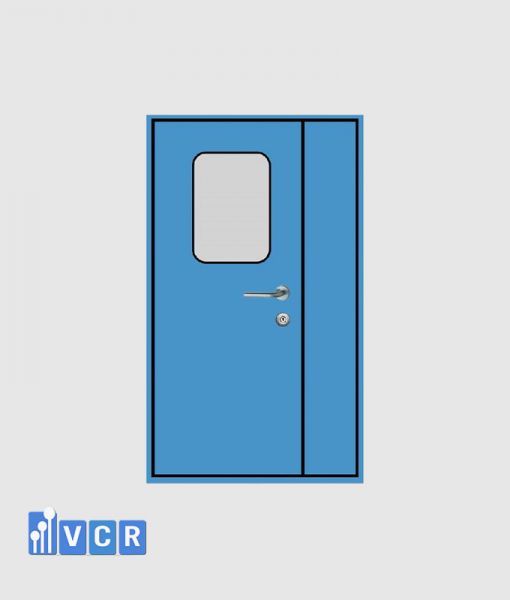


Cleanroom panel doors are widely used in pharmaceutical, food processing, electronics, semiconductor, and medical device manufacturing facilities. This comprehensive guide explains their construction, core materials, technical specifications, applications, airtightness requirements, and selection criteria for cleanroom projects.
- What Is a Cleanroom Panel Door?
- Construction of a Cleanroom Panel Door
- Classification of Cleanroom Panel Doors by Core Material
- Classification by Surface and Frame Material
- Classification by Door Configuration and Opening Mechanism
- Important Technical Specifications of Cleanroom Panel Doors
- Technical Requirements for Different Cleanroom Classifications
- Applications of Cleanroom Panel Doors in Different Industries
- How to Select the Right Cleanroom Panel Door
- Common Mistakes When Selecting and Installing Cleanroom Panel Doors
- 11. What Factors Affect Cleanroom Panel Door Prices?
- Recommended Cleanroom Panel Door Suppliers for Contractors
- Frequently Asked Questions About Cleanroom Panel Doors
- Choosing the Right Cleanroom Panel Door with VCR Cleanroom Equipment
What Is a Cleanroom Panel Door?
A cleanroom panel door is a specially designed door used in controlled environments where airborne particles, microbial contamination, air pressure, and environmental conditions must be managed according to specific requirements.
Cleanroom panel doors are commonly installed in pharmaceutical manufacturing facilities, medical device factories, food processing plants, electronics production areas, laboratories, and other controlled environments.
Unlike conventional residential or industrial doors, cleanroom panel doors are designed to support environmental control through smooth surfaces, appropriate sealing systems, hygienic construction, and compatibility with cleanroom wall panels.
A typical cleanroom panel door consists of two external facing sheets bonded to an internal core material. The core provides structural support and may contribute to thermal insulation, acoustic performance, and other characteristics depending on its composition.
The door assembly generally includes the door leaf, frame, hinges, handles, locking mechanisms, gaskets, and optional vision panels.

The Role of Panel Doors in Cleanroom Environments
Cleanroom panel doors perform several important functions beyond providing access between rooms.
They help establish physical separation between areas with different environmental requirements, support pressure differential control by limiting unintended air leakage, and reduce contamination risks associated with personnel and material movement.
Door construction also affects cleaning and disinfection effectiveness. Smooth, durable surfaces with minimal recesses are generally easier to clean than complex designs with exposed joints or difficult-to-access components.
It is important to distinguish between a cleanroom panel door and a cleanroom door.
The term cleanroom door refers to a broader category that includes stainless steel doors, steel doors, glazed doors, airtight doors, and other specialized constructions.
A cleanroom panel door typically refers to a door incorporating sandwich-panel construction or specifically designed for integration with modular cleanroom panel systems.
Panel doors may be used in facilities classified as ISO Class 5, ISO Class 6, ISO Class 7, or ISO Class 8 under ISO 14644.
However, suitability for a particular cleanliness classification depends on the complete door assembly and the cleanroom design, rather than the product name or core material alone.
Construction of a Cleanroom Panel Door
A cleanroom panel door consists of several interconnected components. Each component contributes to structural stability, durability, sealing performance, and operational reliability.
Door Leaf
The door leaf is the main moving component.
It is commonly manufactured using sandwich-panel construction, consisting of two external facing sheets and an internal core.
The facing sheets may be made from powder-coated steel, stainless steel, or other approved materials.
Bonding technology, internal reinforcement, and edge construction determine the mechanical integrity of the finished door leaf.
In cleanroom applications, the door surface should be sufficiently smooth, resistant to damage under normal operating conditions, and compatible with the cleaning agents used in the facility.
Exposed core materials, poorly sealed edges, or deteriorating surface coatings may introduce contamination risks.
Core Material
The core contributes to door rigidity, weight, thermal insulation, and other performance characteristics.
Common core materials include:
-
EPS (Expanded Polystyrene)
-
PU (Polyurethane)
-
PIR (Polyisocyanurate)
-
Rockwool (Mineral Wool)
-
Honeycomb cores
The selection of core material depends on the intended application, mechanical requirements, fire performance considerations, environmental conditions, and project budget.
Door Frame
The door frame provides structural support and connects the door assembly to the surrounding wall.
Common materials include aluminum alloys, powder-coated steel, and stainless steel.
Cleanroom door frames should be designed to minimize inaccessible recesses and facilitate sealing at the interface between the frame and wall panels.
Frame construction must also accommodate the wall thickness, door weight, hinge loads, and installation tolerances.
Sealing Gaskets
Sealing gaskets are important components for controlling air leakage.
Common materials include EPDM (Ethylene Propylene Diene Monomer) rubber and silicone.
Gaskets may be installed around the door perimeter, while an automatic drop seal may be installed at the bottom of the door leaf.
A drop seal lowers against the floor as the door closes, reducing the opening beneath the door.
Actual airtightness depends on gasket compression, door alignment, hardware adjustment, and installation quality.
A door fitted with sealing gaskets should not automatically be described as completely airtight.
Hinges, Handles, and Locks
Door hardware must be selected according to leaf weight, usage frequency, cleaning requirements, and operating conditions.
Hinges should provide stable support without excessive wear or deformation.
Handles and locks should be designed for convenient operation while minimizing areas where dirt can accumulate.
Additional components may include hydraulic door closers, electromagnetic locks, electronic interlocking systems, and access control devices.
Vision Panels
Vision panels allow personnel to observe activity on the opposite side of the door before opening it.
For cleanroom environments, flush-mounted glazing is often preferred because it reduces protrusions and difficult-to-clean surfaces.
Glass selection must consider mechanical safety, visibility, cleaning compatibility, and any project-specific performance requirements.

Classification of Cleanroom Panel Doors by Core Material
Core material is one of the most common ways to classify panel doors.
Different materials offer different characteristics in terms of weight, insulation, mechanical strength, moisture behavior, and fire performance.
EPS Cleanroom Panel Doors
EPS stands for Expanded Polystyrene, a lightweight cellular plastic material commonly used for thermal insulation.
EPS panel doors generally offer relatively low weight and potentially competitive manufacturing costs.
Their lightweight construction can simplify transportation, handling, and installation.
EPS-core doors may be considered for auxiliary areas, industrial facilities, or controlled environments where the complete assembly satisfies the project requirements.
However, EPS is an organic polymer material, and its fire-related properties require careful evaluation.
The fire performance of a complete door assembly cannot be established solely from the properties of its core.
EPS panel doors should not be specified for fire-rated openings unless the complete door assembly has suitable supporting test evidence and certification.
PU Cleanroom Panel Doors
PU panel doors use rigid polyurethane foam as the core material.
Rigid PU has useful thermal insulation properties and can contribute to lightweight sandwich-panel construction.
PU-core doors may be considered in cleanroom facilities where insulation and structural efficiency are important.
Typical applications include pharmaceutical production areas, controlled-temperature rooms, and facilities using insulated panel partitions.
However, thermal insulation should not be confused with airtightness.
A door with a high-performance insulating core may still experience significant air leakage if the frame, gaskets, or installation are inadequate.
PIR Cleanroom Panel Doors
PIR stands for Polyisocyanurate, a rigid insulation material chemically related to polyurethane.
Certain PIR formulations can provide more favorable reaction-to-fire characteristics than some conventional PU formulations.
Nevertheless, the actual fire classification depends on the specific formulation, manufacturing process, facing materials, and tested construction.
PIR panel doors may be considered for projects requiring thermal insulation together with defined fire performance characteristics.
Where a fire resistance rating is required, such as an EI classification, compliance must be established through testing and documentation covering the relevant complete door assembly.
The door leaf, frame, glazing, sealing system, and hardware may all affect the certified performance.
Rockwool Cleanroom Panel Doors
Rockwool panel doors use mineral wool as the internal core material.
Mineral wool is produced from mineral raw materials and is commonly used for thermal and acoustic insulation.
Many mineral wool products provide non-combustible material characteristics when classified under applicable testing standards.
Rockwool-core doors may therefore be considered in projects where fire safety requirements are particularly important.
However, mineral wool can increase door weight compared with certain lightweight foam cores.
Door design must account for hinge capacity, structural reinforcement, and operational durability.
In cleanroom applications, the internal mineral wool should remain properly enclosed to prevent fiber release into the controlled environment.
Honeycomb Cleanroom Panel Doors
Honeycomb panel doors incorporate an internal cellular structure resembling a honeycomb.
The core may be manufactured from paper, aluminum, or other engineered materials.
Honeycomb construction can provide an advantageous stiffness-to-weight ratio when appropriately designed.
This makes it attractive for certain cleanroom door applications where low weight and adequate rigidity are important.
However, performance varies substantially according to the honeycomb material, cell geometry, bonding system, and facing construction.
Moisture resistance, mechanical durability, fire behavior, and cleaning compatibility must be assessed for each specific design.
Comparison of Cleanroom Panel Door Core Materials
| Core Material | Main Characteristics | Important Considerations | Potential Applications |
|---|---|---|---|
| EPS | Lightweight, insulating, potentially economical | Fire behavior, durability, edge protection | Auxiliary rooms and industrial areas |
| PU | Good thermal insulation, lightweight construction | Fire characteristics, construction quality | Cleanrooms and temperature-controlled areas |
| PIR | Thermal insulation and potentially improved fire behavior compared with some PU systems | Product-specific fire classification | Technically demanding projects |
| Rockwool | Mineral-based, useful acoustic and thermal properties | Weight, core containment, hinge loads | Projects emphasizing fire safety |
| Honeycomb | Potentially high stiffness-to-weight ratio | Core material, moisture resistance, durability | Specialized cleanroom doors |
These comparisons describe general material characteristics, not guaranteed performance levels of finished door products.
For procurement purposes, technical datasheets and assembly-specific test reports should always take priority over generic material descriptions.

Classification by Surface and Frame Material
The surface and frame materials of a cleanroom panel door significantly influence corrosion resistance, cleaning compatibility, visual appearance, and lifecycle cost.
Powder-Coated Steel Panel Doors
Powder-coated steel doors use steel facing sheets with a protective surface finish.
Depending on the product, galvanized steel may be used as the base material.
The powder coating provides a finished surface and can improve resistance to ordinary environmental exposure.
These doors are commonly considered where consistent appearance, mechanical rigidity, and cost efficiency are important.
For cleanroom applications, coating quality is especially significant.
Poor adhesion, scratches, corrosion, or peeling may create contamination risks and increase maintenance requirements.
Cleaning-agent compatibility must be evaluated before specifying the coating system.
Stainless Steel 304 Panel Doors
Stainless steel 304 panel doors use grade 304 stainless steel for the facing sheets, frame, or both.
Stainless steel 304 offers useful corrosion resistance in many industrial environments and is generally easy to clean.
It is frequently considered for pharmaceutical production, food processing, and other applications involving regular cleaning.
However, stainless steel 304 is not resistant to every chemical exposure.
Environments involving elevated chloride concentrations or aggressive cleaning chemicals may require further material assessment.
In certain applications, stainless steel 316L may provide a more suitable alternative.
Aluminum-Framed Panel Doors
Aluminum frames are relatively lightweight and can be manufactured into specialized profiles.
They may be anodized or coated to improve surface durability and appearance.
Aluminum door frames can integrate effectively with modular cleanroom wall systems when the profiles and installation details are properly designed.
Attention should be paid to frame joints, corners, and wall interfaces to prevent inaccessible spaces and unwanted leakage.
Steel and Stainless Steel Frames
Steel frames provide structural rigidity and can accommodate various door configurations.
Stainless steel frames are often considered where corrosion resistance and frequent cleaning are important.
Frame selection should consider door weight, wall construction, environmental exposure, and maintenance requirements.
The most expensive frame material is not necessarily the most suitable option for every application.
Classification by Door Configuration and Opening Mechanism
Cleanroom panel doors are available in various configurations to accommodate personnel access, material movement, and equipment transportation.
Single-Leaf Panel Doors
Single-leaf panel doors are among the most common configurations.
They are suitable for personnel entrances, small material transfer areas, and conventional access openings.
Their relatively simple construction can make installation, adjustment, and maintenance straightforward.
The required clear opening width must be established during design.
Double-Leaf Panel Doors
Double-leaf doors provide a wider opening and are commonly considered where carts or large equipment must pass through.
Both leaves may be active, or one leaf may remain secured during normal operation.
Special attention is required at the meeting edges between the two leaves.
Improper alignment or sealing can create unwanted air leakage.
Hinged Panel Doors
Hinged doors open by rotating around a vertical hinge axis.
They are widely used because of their simple mechanism, mechanical reliability, and compatibility with conventional door closers.
The door swing must be coordinated with corridors, adjacent equipment, personnel movement, and emergency egress requirements.
Sliding Panel Doors
Sliding doors move horizontally along a track or guiding mechanism.
They can be useful where conventional swinging doors would obstruct nearby equipment or circulation space.
However, sliding mechanisms may introduce tracks, joints, and recessed areas that require special cleaning and maintenance consideration.
Ordinary sliding doors should not be assumed to provide the same airtightness as purpose-designed airtight sliding door assemblies.
Automatic Panel Doors
Automatic panel doors incorporate powered opening and closing mechanisms.
They may be activated through sensors, push buttons, access control systems, or other control signals.
Automatic operation can support frequent material movement and reduce the need for direct hand contact.
When specifying these systems, designers must evaluate obstacle detection, emergency release, power failure behavior, and applicable safety requirements.
Interlocked Cleanroom Panel Doors
Interlocking systems control the opening sequence of two or more associated doors.
They are commonly used in airlocks, which are transition spaces between areas with different environmental conditions.
An interlocking system can prevent simultaneous opening of designated doors under specified operating conditions.
However, the design must also account for emergency evacuation, personnel safety, and the facility's operating procedures.

Important Technical Specifications of Cleanroom Panel Doors
Technical specifications should describe the performance and construction of the complete door assembly.
Relying exclusively on core material, nominal door thickness, or appearance can lead to procurement errors.
Door Dimensions
Cleanroom door dimensions should distinguish between the structural opening, overall assembly dimensions, and actual clear opening.
The clear opening is particularly important where carts, trolleys, equipment, or large materials must pass through.
For example, an overall door assembly width of 1,000 mm does not necessarily provide a clear passage width of 1,000 mm.
Frames, hinges, and opening geometry can reduce usable space.
Technical drawings should therefore identify which dimensions are being specified.
Door Leaf Thickness
Panel door leaf thickness varies according to product design.
Some cleanroom panel door systems use nominal thicknesses of approximately 40 mm or 50 mm, while other configurations are also available.
No single leaf thickness is universally required for all cleanroom panel doors.
Thickness should be selected according to mechanical stability, internal reinforcement, hardware integration, and application requirements.
Facing Sheet Specifications
Facing sheet specifications should identify the base material, nominal thickness, finishing process, and relevant performance requirements.
For powder-coated steel, coating adhesion, finish quality, and chemical compatibility may be important.
For stainless steel, the grade and surface finish should be clearly identified.
Airtightness Performance
Airtightness describes the ability of the door assembly to limit uncontrolled air leakage.
Leakage may occur around the frame, beneath the door leaf, through glazing interfaces, and at hardware penetrations.
Air leakage depends on pressure differential, gap geometry, sealing compression, and installation quality.
For projects with strict leakage requirements, the procurement specification should define:
-
The test method
-
The applied pressure differential
-
The maximum permissible air leakage
-
The testing and acceptance conditions
Descriptions such as “100% airtight” should be avoided unless they are supported by clearly defined test criteria.
Hinge Capacity and Structural Strength
Hinges must support the door weight and repeated opening cycles.
Large leaves and heavier core materials may require reinforced hinge attachment points.
Inadequate hinge selection can cause sagging, misalignment, scraping, and deteriorating sealing performance.
Vision Panel Specifications
Vision panels should be specified according to size, glazing type, safety requirements, and installation details.
Flush-mounted glazing can help reduce ledges and simplify cleaning.
Glass selection may also need to consider impact resistance and applicable safety standards.
Locking and Interlocking Systems
Cleanroom panel doors may incorporate mechanical locks, electromagnetic locks, electric strikes, position sensors, and interlocking controllers.
The electrical specification should define power supply requirements, control signals, monitoring functions, and power failure behavior.
Emergency release arrangements must comply with applicable safety requirements.
Reference Technical Specification Table
| Parameter | Typical Specification Approach |
|---|---|
| Door configuration | Single-leaf, double-leaf, hinged, sliding |
| Dimensions | According to approved drawings |
| Leaf thickness | For example, 40–50 mm or project-specific |
| Surface material | Powder-coated steel, stainless steel 304, or approved alternative |
| Core material | EPS, PU, PIR, Rockwool, Honeycomb |
| Frame material | Aluminum, steel, or stainless steel |
| Perimeter gasket | EPDM, silicone, or specified equivalent |
| Bottom seal | Fixed or automatic drop seal |
| Vision panel | Optional, with defined glazing specifications |
| Hinges | Rated for door weight and operating cycles |
| Locking system | Mechanical, electromagnetic, or interlocked |
| Airtightness | Defined leakage limit and test conditions |
| Surface finish | Smooth, durable, cleanable |
| Documentation | Drawings, datasheets, and applicable test reports |
This table provides a reference framework for preparing a technical inquiry or Request for Quotation (RFQ). It does not represent a universal ISO 14644 compliance specification.

Technical Requirements for Different Cleanroom Classifications
Door selection should reflect the requirements of the entire cleanroom system, including cleanliness classification, airflow strategy, pressure control, contamination risks, and cleaning procedures.
Cleanroom Panel Doors and ISO 14644
ISO 14644 is an international standards series covering cleanrooms and associated controlled environments.
ISO 14644-1 addresses air cleanliness classification based on airborne particle concentration.
ISO 14644-4:2022 covers cleanroom design, construction, and start-up.
These standards do not establish a universal rule requiring stainless steel doors for ISO Class 5 or PU-core doors for ISO Class 7.
Instead, the designer must evaluate whether the proposed door construction supports the relevant cleanroom requirements.
For critical environments, factors such as surface cleanability, particle generation, uncontrolled air leakage, and operational performance become especially important.
For less demanding applications, a broader range of materials may be acceptable if the complete construction meets the required performance.
Cleanroom Panel Doors and EU GMP Annex 1
EU GMP Annex 1 provides regulatory guidance for the manufacture of sterile medicinal products.
Door design should be considered within the facility's Contamination Control Strategy (CCS), which is a coordinated approach to identifying and controlling contamination risks.
Important considerations include hygienic construction, cleanable surfaces, movement control, and the relationship between doors and surrounding classified spaces.
Section 4.13 of Annex 1 addresses airlock door operation.
Entry and exit doors for personnel or material airlocks should not be opened simultaneously.
For airlocks leading to Grade A and Grade B areas, an interlocking system is required.
For airlocks leading to Grade C and Grade D areas, at least a visual and/or audible warning system is required.
Where separation between areas must be maintained, a time delay between the closing and opening of interlocked doors may be necessary.
Consequently, door selection in pharmaceutical facilities should account for electrical integration, control logic, and operating procedures in addition to mechanical construction.
Pressure Differential Control
Pressure differentials are commonly used to control airflow direction between cleanroom areas.
Appropriately sealed panel doors can help reduce unintended leakage and support pressure differential stability.
However, increasing door airtightness does not automatically guarantee optimal HVAC performance.
The ventilation design may require carefully managed transfer airflow, return air pathways, or other pressure-balancing arrangements.
In negative-pressure environments, protecting personnel and surrounding areas may take priority over maintaining positive pressure around the product.
The door configuration should therefore be selected according to the facility's pressure control strategy.
Applications of Cleanroom Panel Doors in Different Industries
Pharmaceutical Manufacturing
Cleanroom panel doors are used in production rooms, changing rooms, airlocks, clean corridors, and support areas.
Important selection criteria include cleanability, surface durability, sealing performance, and compatibility with contamination control procedures.
For sterile manufacturing, door construction and interlocking arrangements must be evaluated according to the applicable GMP requirements.
Cosmetics Manufacturing
Cosmetics facilities use panel doors to separate raw material handling, mixing, filling, packaging, and supporting operations.
Cleaning compatibility, corrosion resistance, and operational reliability are important considerations.
Food Processing
Cleanroom panel doors may be used in food processing, packaging, ingredient preparation, and hygiene-controlled production areas.
Where washdown conditions or high humidity are present, material selection should consider corrosion, moisture ingress, and hygienic construction.
Electronics and Semiconductor Manufacturing
Electronics manufacturing environments often require control of airborne particles, temperature, humidity, and electrostatic discharge.
Door surfaces and accessories should be assessed for particle generation and compatibility with relevant environmental requirements.
Semiconductor production may impose additional contamination control demands, including airborne molecular contamination and electrostatic discharge protection.
The cleanroom door must be evaluated within the broader contamination control system.
Medical Device Manufacturing
Medical device facilities may require controlled production environments depending on product type and manufacturing processes.
Panel doors can be used to separate areas with different cleanliness and operational requirements.
Selection should reflect the facility's risk assessment and applicable quality management requirements.
Laboratories and Healthcare Facilities
Panel doors may be used in controlled laboratories, healthcare facilities, and research environments.
Certain laboratories may also require chemical resistance, biosafety considerations, or specialized containment performance.
In such applications, door selection must account for the specific safety requirements rather than cleanliness classification alone.
How to Select the Right Cleanroom Panel Door
Choosing the correct cleanroom panel door requires a structured technical assessment.
The process should begin with the facility's functional requirements rather than the price or appearance of a particular product.
Step 1: Identify the Application
Determine whether the door will be installed in a production room, corridor, airlock, changing room, support area, or material transfer route.
Each location may have different requirements for traffic frequency, sealing, cleaning, and access control.
Step 2: Review Cleanliness and Pressure Requirements
Examine the cleanroom classification drawings, pressure differential schedule, and airflow direction.
Doors separating rooms with different pressure conditions may require particular attention to sealing performance and operating frequency.
Step 3: Select the Core and Surface Materials
Material selection should consider cleaning chemicals, temperature, humidity, corrosion exposure, structural requirements, and applicable fire safety regulations.
Neither stainless steel nor any specific insulation core should automatically be considered the best choice for every project.
Step 4: Define Clear Opening Dimensions
Confirm the maximum dimensions of carts, pallets, equipment, and materials that must pass through the doorway.
Future maintenance and equipment replacement requirements should also be considered.
An undersized clear opening can lead to costly modifications after the facility becomes operational.
Step 5: Select the Opening Mechanism
Hinged doors are appropriate for many conventional access points.
Double-leaf doors may be required for larger materials.
Sliding or automatic doors may be considered when space constraints or operating requirements justify their use.
Door operation must remain compatible with emergency egress and personnel safety requirements.
Step 6: Specify Door Hardware
Hardware requirements should be defined before manufacturing.
These may include hinges, handles, locks, closers, vision panels, seals, and interlocking systems.
For electrically controlled doors, power failure behavior and emergency operation must be clearly established.
Step 7: Verify Technical Documentation
Before ordering, contractors should review the technical drawings, material specifications, hardware schedule, installation instructions, and applicable test reports.
Where airtightness or fire performance is specified, the acceptance criteria and supporting evidence should be defined clearly.
Recommended Selection Matrix
| Application | Priority Requirements | Potential Solution |
|---|---|---|
| Pharmaceutical production | Cleanability, sealing, surface durability | Smooth-surface door with suitable gaskets |
| Cleanroom airlock | Controlled door-opening sequence | Door with interlocking system |
| Food manufacturing | Hygienic construction, corrosion resistance | Appropriate corrosion-resistant finish |
| Electronics manufacturing | Particle control, reliable operation | Smooth finishes and low-particle-generation hardware |
| Temperature-controlled room | Thermal insulation and leakage control | Insulated core with appropriate sealing |
| Equipment transfer route | Clear opening and mechanical durability | Double-leaf or specialized configuration |
The matrix is intended for initial selection only. Final specifications should be based on approved engineering requirements.

Common Mistakes When Selecting and Installing Cleanroom Panel Doors
One common mistake is specifying the door solely according to the structural opening without verifying the actual clear opening.
This can create problems when carts or production equipment cannot pass through the installed doorway.
Another mistake is selecting surface materials that are incompatible with cleaning chemicals.
Inadequate chemical resistance can lead to corrosion, coating deterioration, or surface damage, potentially increasing contamination risks.
Poor gasket selection or incorrect adjustment can also compromise sealing performance.
Even a high-quality door may leak excessively if its leaf and frame are misaligned.
Inadequate hinge capacity can cause door sagging, mechanical wear, and difficulty closing the door completely.
For interlocked doors, insufficient testing of control logic and power failure conditions can introduce operational difficulties and safety risks.
These issues can be reduced through detailed drawing review, appropriate product specification, correct installation, and functional testing before handover.
11. What Factors Affect Cleanroom Panel Door Prices?
The price of a cleanroom panel door depends on its dimensions, materials, construction, accessories, and performance requirements.
Single-leaf doors with basic hardware generally have simpler construction than double-leaf doors or automatic door systems.
However, final pricing also depends on manufacturing details, quantities, and project-specific requirements.
Stainless steel surfaces, specialized glazing, automatic drop seals, electronic interlocks, and advanced hardware can significantly affect production costs.
Additional expenses may include packaging, transportation, installation, adjustment, and testing.
When requesting a quotation, contractors should provide technical drawings, quantities, material specifications, hardware requirements, delivery location, and project schedule.
Comparing quotations solely by unit price can be misleading if the door configurations or supply scopes are not equivalent.
Recommended Cleanroom Panel Door Suppliers for Contractors
Selecting a reliable cleanroom panel door supplier requires more than comparing product prices.
A suitable supplier should provide clear technical information, appropriate material specifications, detailed drawings, and support during product selection.
For cleanroom construction contractors, dimensional accuracy and delivery reliability are particularly important because door assemblies must integrate with the wall system and overall project schedule.
VCR Cleanroom Equipment (Thiết bị phòng sạch VCR) supplies cleanroom equipment and related solutions for cleanroom construction contractors in Vietnam.
VCR focuses on helping contractors select suitable cleanroom equipment according to engineering drawings, operational requirements, and project specifications.
For cleanroom panel doors and related accessories, customers can contact VCR to discuss door dimensions, core materials, facing materials, frame construction, opening mechanisms, sealing systems, and hardware configurations.
Where projects require special airtightness, fire resistance, or testing documentation, compliance should be verified against the specific proposed product and available technical records before procurement.
By focusing on equipment supply and technical coordination, VCR supports contractors in obtaining suitable products for pharmaceutical, food processing, electronics, medical device, and other controlled-environment projects.
Frequently Asked Questions About Cleanroom Panel Doors
What is a cleanroom panel door?
A cleanroom panel door is a door designed for use in controlled environments. It commonly features sandwich-panel construction, smooth surfaces, a suitable frame, and sealing components. Its purpose is to provide access while supporting cleanability, environmental separation, and contamination control requirements.
What types of cleanroom panel doors are available?
Cleanroom panel doors can be classified by core material, surface material, and opening mechanism. Common core types include EPS, PU, PIR, Rockwool, and Honeycomb. Door configurations include single-leaf, double-leaf, hinged, sliding, and automatic designs.
What is the difference between EPS, PU, PIR, and Rockwool panel doors?
The main differences involve core composition, thermal performance, weight, and fire-related characteristics. EPS is lightweight, PU and PIR provide thermal insulation, and Rockwool is a mineral-based material. Final selection depends on the complete door construction and project requirements.
What is the standard thickness of a cleanroom panel door?
Some cleanroom panel door systems have nominal leaf thicknesses of approximately 40–50 mm, but other configurations are available. There is no universally mandatory thickness for all cleanroom panel doors. The appropriate dimension depends on engineering specifications and manufacturer design.
Are stainless steel 304 panel doors better than powder-coated steel doors?
Not necessarily. Stainless steel 304 provides good corrosion resistance in many environments and is often suitable for frequent cleaning. Powder-coated steel can also perform well when the coating system and operating conditions are appropriate. Material selection should reflect the application.
Do cleanroom panel doors need to be airtight?
The required airtightness depends on the room function and pressure control strategy. Doors separating areas with important pressure differentials may require stringent leakage control. However, a universal airtightness limit does not apply to every cleanroom panel door.
Can cleanroom panel doors be equipped with interlocking systems?
Yes. Cleanroom panel doors can incorporate electronic interlocks, electromagnetic locks, door-position sensors, and controllers. These systems are commonly used in airlocks to manage door-opening sequences while maintaining appropriate safety and emergency access arrangements.
Are cleanroom panel doors suitable for GMP pharmaceutical facilities?
They can be suitable when their construction and performance meet the applicable facility requirements. Important factors include cleanability, sealing, surface durability, and appropriate interlocking arrangements. Compliance cannot be established solely from a door's material description.
What determines the price of a cleanroom panel door?
Pricing depends on door size, core material, facing material, frame construction, glazing, seals, locks, operating mechanism, and required documentation. Additional testing, specialized hardware, and project-specific configurations may also affect the final price.
Where can contractors buy cleanroom panel doors in Vietnam?
Contractors should prioritize suppliers that provide clear product specifications, technical support, manufacturing drawings, and suitable equipment configurations. Thiết bị phòng sạch VCR is a supplier that contractors can contact to discuss cleanroom door and accessory requirements for projects in Vietnam.

Choosing the Right Cleanroom Panel Door with VCR Cleanroom Equipment
Cleanroom panel doors are important components of controlled-environment construction. They provide access while supporting physical separation, environmental control, and operational requirements.
Selecting the right door requires consideration of core material, surface finish, dimensions, airtightness, hardware, opening mechanism, and project-specific standards.
The lowest-cost door is not necessarily the most cost-effective solution when long-term reliability, cleaning requirements, and maintenance are considered.
Need Technical Support for Your Cleanroom Panel Door Project?
Thiết bị phòng sạch VCR supplies specialized cleanroom equipment for cleanroom construction contractors throughout Vietnam.
VCR supports customers in selecting appropriate product configurations based on engineering drawings, material requirements, dimensions, hardware specifications, and operating conditions.
Contact Thiết bị phòng sạch VCR to discuss your cleanroom panel door requirements and request a project-specific quotation.
Website: https://vietnamcleanroom.com
Thiết bị phòng sạch VCR – Fast Delivery, On-Time Commitment, Dedicated Support.