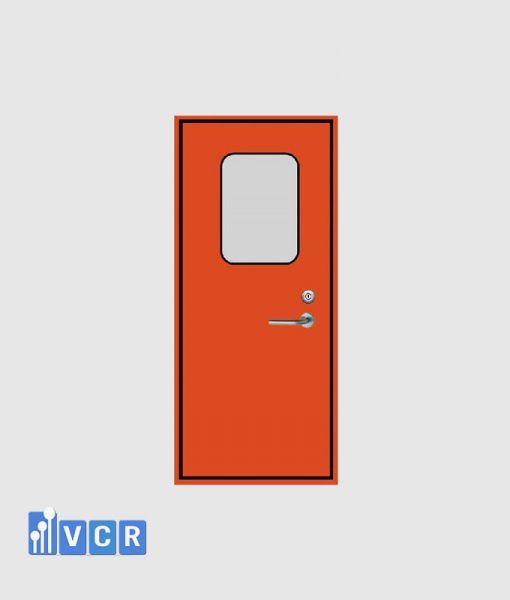
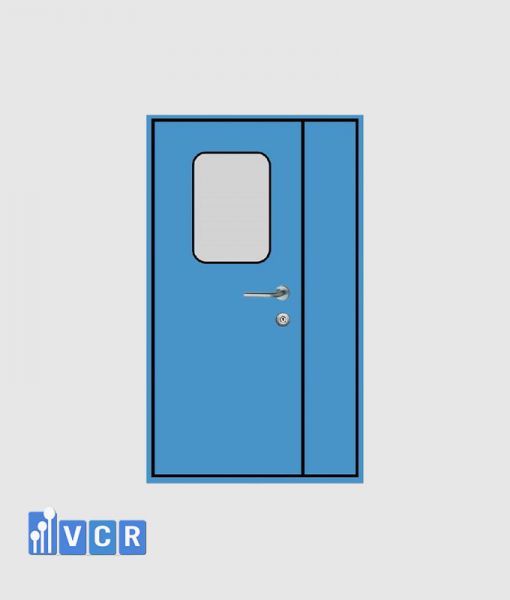
In real-world implementation, “VCR Cleanroom Equipment” has found that cleanroom doors are not just structural elements but essential parts of the overall environmental control system.
What is a cleanroom door?
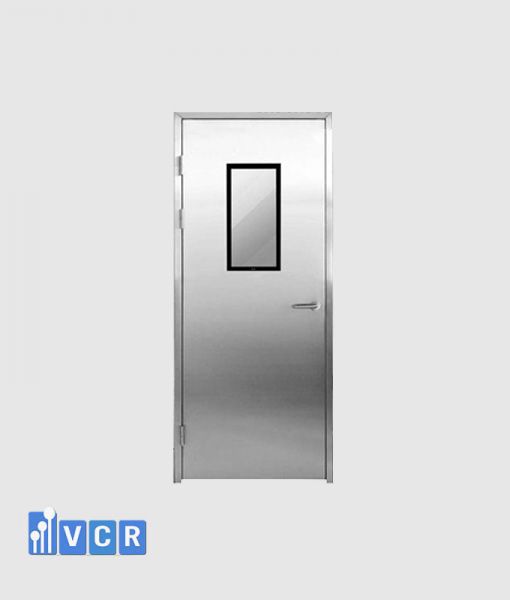
A cleanroom door is a specially designed door used in controlled environments where strict requirements for particle control, microbial contamination, and pressure differentials are enforced. Unlike conventional doors, cleanroom doors feature smooth surfaces, non-particle-shedding materials, and high airtightness to maintain stable environmental conditions. They are often integrated with sealing systems and may be connected to interlock or access control systems. A cleanroom door is not merely a physical barrier but a functional component that supports environmental stability and regulatory compliance within the cleanroom system.
What is the purpose of a cleanroom door?
Cleanroom doors are used to control the movement of personnel, materials, and air between areas with different cleanliness classifications. They help maintain pressure differentials, prevent contaminated air from entering clean zones, and reduce the risk of cross-contamination. Additionally, doors work in coordination with HVAC systems to ensure airflow follows the intended design. Proper use of cleanroom doors supports stable operation and compliance with ISO and GMP standards.
What is the working principle of a cleanroom door?
Cleanroom doors operate based on airtight sealing and pressure differential control. When closed, sealing systems ensure minimal air leakage and maintain environmental stability. When opened, airflow is managed by the HVAC system to minimize contamination risks. In many applications, doors are integrated with interlock systems to prevent simultaneous opening. This principle ensures consistent contamination control and stable cleanroom performance.
What role do cleanroom doors play in pressure control?
Cleanroom doors are essential for maintaining pressure differentials between adjacent areas. When properly sealed, they help preserve pressure gradients and ensure airflow moves in the intended direction. If doors are not airtight or operated incorrectly, pressure balance may be disrupted, leading to contamination risks. Therefore, doors are a critical component in environmental control systems.
When are cleanroom doors required?
Cleanroom doors are required in environments where contamination control is critical, such as pharmaceutical manufacturing, electronics production, food processing, cosmetics, and healthcare facilities. These environments demand strict control of particles and microorganisms, making specialized doors essential for maintaining compliance and product quality.
How do cleanroom doors differ from conventional doors?
Cleanroom doors are designed with high airtightness, smooth surfaces, and non-shedding materials, unlike conventional doors. They are also often integrated with control systems such as interlocks. These features make them suitable for controlled environments requiring strict contamination control.
What types of cleanroom doors are available?
Common types include swing doors, sliding doors, automatic doors, and fire-rated cleanroom doors. Each type is selected based on operational requirements and space constraints. Choosing the right type ensures optimal performance and efficiency.
Do cleanroom doors require high airtightness?
Yes, airtightness is critical to maintaining pressure differentials and preventing contamination. Proper sealing systems must be used to ensure effective performance. Poor sealing can compromise cleanroom integrity.
Do cleanroom doors require special materials?
Yes, materials must be corrosion-resistant, easy to clean, and non-particle generating. Stainless steel or coated materials are commonly used to meet these requirements. Proper material selection ensures durability and hygiene.
Can cleanroom doors be integrated with interlock systems?
Yes, cleanroom doors are often integrated with interlock systems to control door operation and prevent simultaneous opening. This integration improves contamination control and system efficiency.
Do cleanroom doors affect airflow?
Yes, doors directly impact airflow patterns. Improper door operation can disrupt airflow and pressure balance. Proper design and operation are essential.
Do cleanroom doors need to comply with standards?
Yes, cleanroom doors must comply with standards such as ISO 14644 and GMP requirements. Compliance ensures effective performance and audit readiness.
Do cleanroom doors require maintenance?
Yes, regular maintenance ensures proper sealing, functionality, and longevity. Preventive maintenance reduces the risk of failure and maintains performance.
Can cleanroom doors be used across different industries?
Yes, cleanroom doors are used in multiple industries including pharmaceuticals, electronics, food, and healthcare. Each industry has specific requirements but shares the need for contamination control.
Do cleanroom doors impact GMP compliance?
Yes, cleanroom doors directly affect contamination control and pressure stability, which are key GMP requirements. Improper doors may lead to non-compliance.
Do cleanroom doors require custom design?
Yes, doors should be designed based on specific project requirements, including airflow, pressure, and operational needs. Custom design ensures optimal performance.
Do cleanroom doors require system integration?
Yes, they can be integrated with HVAC, interlock, and access control systems for improved performance. Integration ensures coordinated operation.
Is operator training required for cleanroom doors?
Yes, training ensures correct operation and reduces system errors. Proper use supports long-term reliability.
Can cleanroom doors cause cross-contamination?
Yes, improper operation or poor sealing can lead to cross-contamination between areas. Correct use and maintenance are essential.
How can the role of cleanroom doors be properly understood?
To fully understand their role, cleanroom doors should be viewed as part of the environmental control system rather than simple physical barriers. Proper selection, installation, and operation ensure stable airflow, pressure control, and contamination prevention. When correctly implemented, cleanroom doors play a key role in maintaining product quality and ensuring long-term compliance with ISO and GMP standards.
Duong VCR