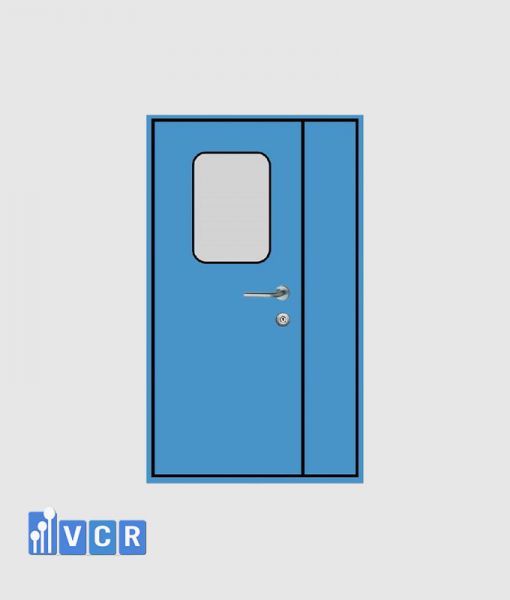

Cleanroom doors are critical components for controlling pressure differentials and contamination, and are often assessed during ISO and GMP audits. Understanding standards helps ensure compliance and stable operation.
- How are cleanroom doors related to ISO 14644?
- What does EU GMP Annex 1 require regarding cleanroom doors?
- What are WHO GMP requirements for cleanroom doors?
- Do cleanroom doors require validation?
- Do cleanroom doors require IQ/OQ/PQ qualification?
- Do cleanroom doors need to comply with material standards?
- Are there airtightness requirements for cleanroom doors?
- Are cleanroom doors checked during GMP audits?
- Are SOPs required for cleanroom doors?
- Are operational logs required for cleanroom doors?
- Are periodic inspections required?
- Is risk assessment required for cleanroom doors?
- Is change control required for door modifications?
- Is design documentation required?
- Should system integration be verified?
- Is operator training required?
- Can cleanroom doors cause audit findings?
- Should pressure differentials be verified?
- Are maintenance records required?
- How can cleanroom doors consistently meet ISO and GMP standards?
In real-world implementation, “VCR Cleanroom Equipment” has found that cleanroom doors are not evaluated as standalone items but as part of the overall environmental control system.
How are cleanroom doors related to ISO 14644?
Cleanroom doors are not directly specified as standalone equipment in ISO 14644, but they play a critical indirect role in maintaining cleanroom classification. The standard focuses on particle control and environmental conditions, where doors directly influence airflow and pressure differentials between zones. If doors are not properly sealed or operated incorrectly, airflow patterns may be disrupted, leading to increased particle levels and failure to meet classification requirements. Therefore, cleanroom doors must be properly designed, installed, and operated to support compliance with ISO 14644 effectively and consistently.
What does EU GMP Annex 1 require regarding cleanroom doors?
EU GMP Annex 1 does not provide specific requirements solely for doors, but it emphasizes strict environmental control and contamination prevention in sterile manufacturing. In this context, cleanroom doors must ensure airtightness, prevent cross-contamination, and support pressure differentials. Doors should be easy to clean, non-particle shedding, and suitable for different cleanroom grades. In critical areas such as airlocks or sterile zones, doors are often integrated with interlock systems to prevent simultaneous opening. Meeting these principles is essential for GMP compliance.
What are WHO GMP requirements for cleanroom doors?
WHO GMP does not define detailed requirements specifically for doors but requires effective control of contamination and pressure differentials. Cleanroom doors must be airtight, easy to clean, and designed to minimize particle generation. They should also support proper personnel and material flow to avoid cross-contamination. Proper design and operation ensure compliance with WHO GMP expectations.
Do cleanroom doors require validation?
In many GMP systems, cleanroom doors are not validated as standalone equipment but as part of the overall cleanroom or HVAC system. However, if doors directly affect pressure differentials or are integrated with interlock systems, validation becomes necessary to demonstrate correct performance. Validation ensures that doors function as intended and do not compromise environmental control. This is important for audit readiness and compliance.
Do cleanroom doors require IQ/OQ/PQ qualification?
Cleanroom doors are often included within the scope of IQ/OQ/PQ as part of the overall system. Installation Qualification (IQ) confirms proper installation, Operational Qualification (OQ) verifies functional performance, and Performance Qualification (PQ) evaluates real operating conditions. These steps demonstrate that doors meet design and operational requirements, supporting GMP compliance.
Do cleanroom doors need to comply with material standards?
Yes, materials must be non-particle shedding, corrosion-resistant, and easy to clean. This ensures hygiene and compliance with GMP requirements in controlled environments.
Are there airtightness requirements for cleanroom doors?
Yes, airtightness is essential to maintain pressure differentials and airflow control. Proper sealing systems must be implemented to prevent air leakage.
Are cleanroom doors checked during GMP audits?
Yes, auditors typically assess doors indirectly by evaluating environmental performance and operational conditions. This helps determine overall compliance.
Are SOPs required for cleanroom doors?
Yes, SOPs standardize operation, maintenance, and troubleshooting procedures. They ensure consistency and reduce human error.
Are operational logs required for cleanroom doors?
Yes, logs provide traceability and evidence of system performance. They are important for GMP audits and compliance documentation.
Are periodic inspections required?
Yes, regular inspections help detect issues early and ensure doors function correctly. This supports long-term reliability.
Is risk assessment required for cleanroom doors?
Yes, risk assessment helps identify potential weaknesses in design and operation. It is an important part of modern GMP systems.
Is change control required for door modifications?
Yes, any modification must be managed through change control procedures to ensure system integrity and compliance.
Is design documentation required?
Yes, design documentation demonstrates that the door system meets technical and regulatory requirements. It is essential for audits.
Should system integration be verified?
Yes, if doors are integrated with HVAC or interlock systems, integration must be verified to ensure proper operation and avoid failures.
Is operator training required?
Yes, training ensures correct usage and reduces operational errors. This improves system reliability and compliance.
Can cleanroom doors cause audit findings?
Yes, if doors fail to maintain airtightness or are operated incorrectly, they may result in non-compliance findings during audits.
Should pressure differentials be verified?
Yes, pressure differentials should be checked to confirm that doors support environmental control effectively.
Are maintenance records required?
Yes, maintenance records demonstrate proper system upkeep and are essential for GMP compliance and audit readiness.
How can cleanroom doors consistently meet ISO and GMP standards?
Consistent compliance requires proper design, appropriate material selection, and adherence to SOPs. Regular inspections, complete documentation, and trained personnel are also essential. Effective system management ensures stable operation, maintains pressure differentials, and minimizes contamination risks. When properly implemented, cleanroom doors play a vital role in ensuring long-term compliance with ISO 14644 and GMP standards throughout the system lifecycle.
Duong VCR