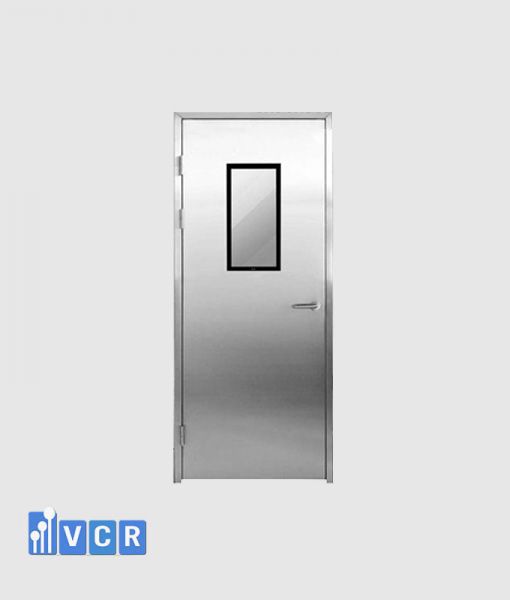
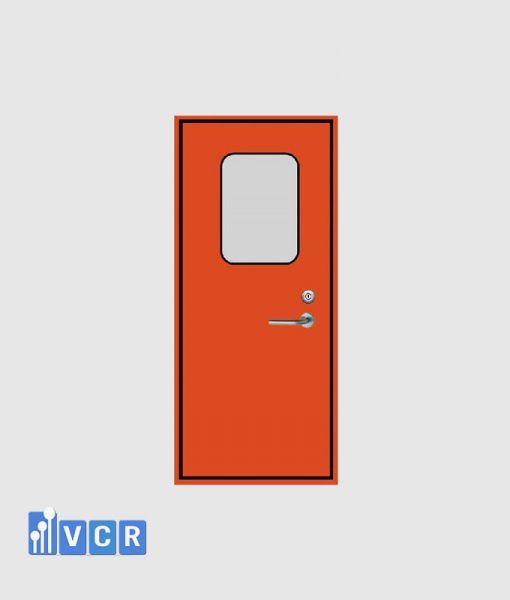
In real-world implementation, “VCR Cleanroom Equipment” has found that the performance of cleanroom doors depends heavily on proper design from the beginning, especially airtightness and system integration.
What are the main components of a cleanroom door?
A cleanroom door consists of several integrated components designed to ensure airtightness and operational stability. These include the door frame, door leaf, internal core material, surface finishing layer, sealing gaskets, hardware such as hinges or sliding rails, and optional integrated features like vision panels or interlock systems. The core is typically made of lightweight yet rigid materials such as aluminum honeycomb or foam to reduce weight while maintaining strength. Gaskets play a critical role in preventing air leakage and maintaining pressure differentials. All components must be designed to be non-particle shedding, easy to clean, and compliant with ISO and GMP requirements.
How is the door leaf designed for cleanroom applications?
The door leaf is typically designed with a flat, smooth surface and minimal joints to prevent dust accumulation. The internal core uses lightweight materials such as honeycomb or foam to provide structural strength while reducing weight. The outer surface is often finished with powder-coated steel or stainless steel to ensure durability and ease of cleaning. This design ensures airtight sealing, minimizes particle generation, and supports strict environmental control requirements.
What are the design requirements for cleanroom door frames?
Cleanroom door frames must be robust, airtight, and fully compatible with wall panels or cleanroom structures. Materials such as stainless steel or powder-coated steel are commonly used for corrosion resistance and durability. Frames must be precisely installed to eliminate gaps and prevent air leakage. Proper frame design ensures system stability and effective pressure control.
What is the role of gaskets in cleanroom doors?
Gaskets are essential components that create a tight seal between the door leaf and frame. They prevent uncontrolled air exchange and help maintain pressure differentials. Typically made from elastic materials such as silicone or EPDM, gaskets must provide long-term durability and consistent sealing performance. Improper gasket installation or degradation can significantly impact cleanroom performance.
How are materials selected for cleanroom doors?
Materials must be non-particle shedding, corrosion-resistant, easy to clean, and suitable for the operating environment. Stainless steel, powder-coated steel, and composite materials are commonly used. Materials must also withstand cleaning chemicals and environmental conditions. Proper selection ensures durability and GMP compliance.
What are the common types of cleanroom door designs?
Common designs include swing doors, sliding doors, and automatic doors. Each type is selected based on space constraints, operational requirements, and workflow efficiency. Choosing the right type improves performance and usability.
What factors influence cleanroom door design?
Key factors include pressure differentials, airflow patterns, usage frequency, and hygiene requirements. These determine the structure, materials, and configuration of the door system.
What systems can be integrated with cleanroom doors?
Cleanroom doors can be integrated with interlock systems, access control systems, and building management systems (BMS). Integration improves control, monitoring, and operational efficiency.
What is the purpose of vision panels in cleanroom doors?
Vision panels allow operators to observe activities inside without opening the door, reducing contamination risks. They are designed to be flush-mounted and airtight.
Do cleanroom doors require fire-resistant design?
In certain applications, fire-rated cleanroom doors are required to meet safety regulations. This depends on building codes and operational requirements.
Do cleanroom doors need sound insulation?
In some environments, sound insulation may be necessary to reduce noise and improve working conditions. This depends on the specific application.
Do cleanroom doors require anti-static design?
In electronics industries, anti-static properties are important to protect sensitive components. Specialized materials may be used to prevent static buildup.
Should cleanroom doors be designed to optimize airflow?
Yes, door design must minimize airflow disruption and maintain pressure stability. Proper design supports overall cleanroom performance.
Do cleanroom doors require custom design?
Yes, each cleanroom has unique requirements, so doors should be customized to match airflow, pressure, and operational needs. Custom design ensures optimal performance.
Can sensors be integrated into cleanroom doors?
Yes, sensors can detect door status and support interlock system functionality. This improves control and operational reliability.
Should cleanroom doors be designed for easy cleaning?
Yes, surfaces must be smooth and free of dead corners to facilitate cleaning and prevent contamination buildup. Hygienic design is essential.
Is durability important in cleanroom door design?
Yes, high durability ensures long-term performance and reduces maintenance costs. This is especially important in high-use environments.
Do cleanroom doors need airtight design?
Yes, airtightness is essential for maintaining pressure differentials and preventing contamination. Proper sealing design is critical.
Should cleanroom doors be compatible with wall panels?
Yes, compatibility with cleanroom panels ensures airtight integration and structural consistency. This improves system performance.
How can cleanroom door design be optimized?
Optimal design requires balancing technical requirements, material selection, and operational conditions. Integration with HVAC, interlock, and access control systems is also essential. A well-designed door system ensures stable environmental control, reduces operational risks, and supports long-term compliance with ISO and GMP standards.
Duong VCR